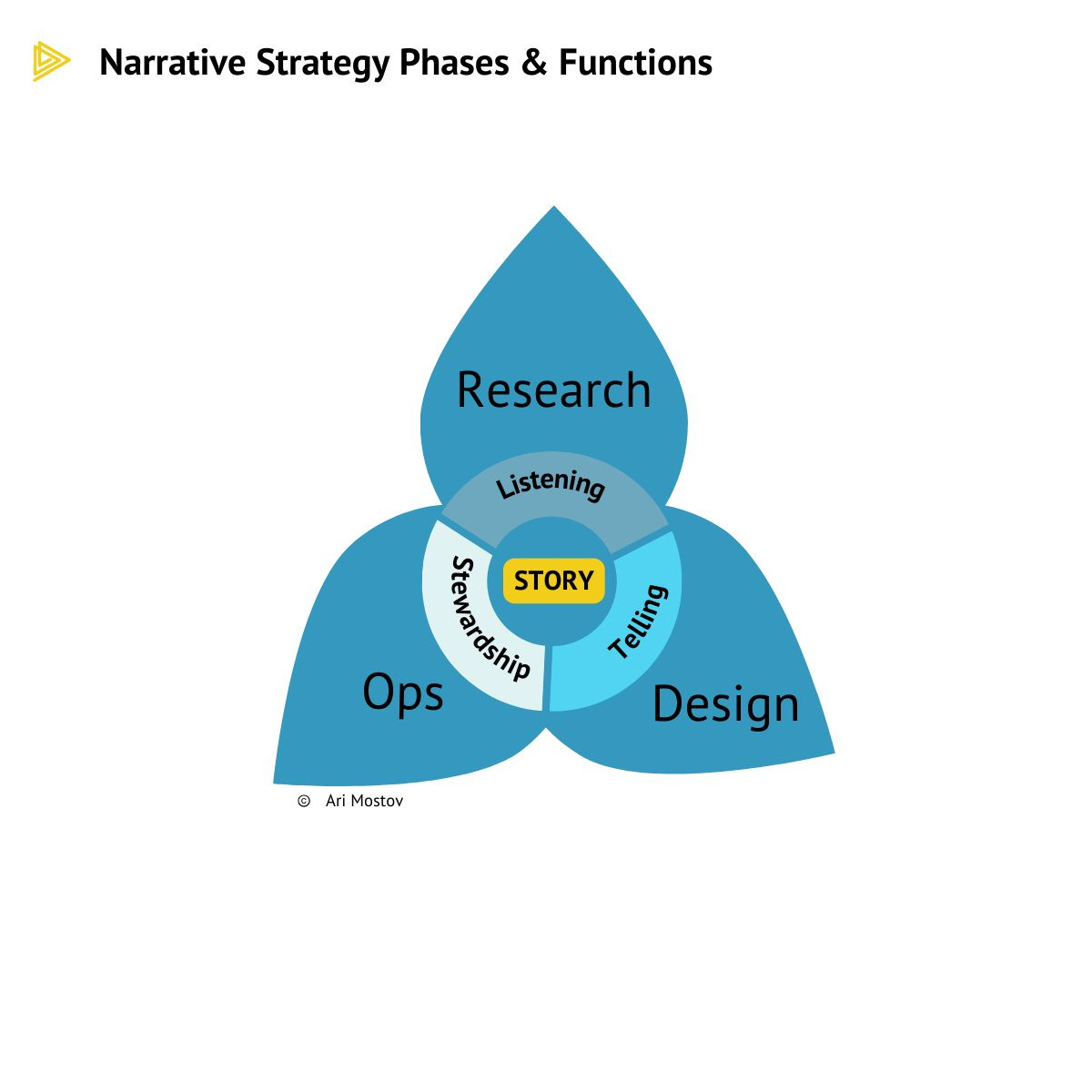
Narrative Strategy uses storytelling and communications to deliver outcomes. It's especially useful for regulated industries, where stakeholder engagement can be a full-time job. When dealing with multiple interests and diverse perspectives, narrative strategy aligns and mobilizes stakeholders to achieve what might seem impossible.
Here's how I use narrative strategy in its 3 phases.
Phase 1: Story-listening
During this initial stage, I delve into research to grasp the current narrative in which stakeholders are engaged, understand their ongoing experiences, and identify existing challenges. This phase is critical, as it involves both quantitative and qualitative data collection. I gather those insights into a narrative synthesis document, setting the foundation for strategic development.
Phase 2: Storytelling
This phase focuses on collaborative creation of the new narrative. Working alongside cross-functional teams and diverse stakeholder groups, we craft a compelling narrative that resonates across audiences. The result is a comprehensive narrative bible that guides messaging and guides the production of various narrative assets, such as videos and white papers, tailored for specific audience needs.
Phase 3: Story-stewardship
In the final phase, the narrative is put into action. I partner with leadership and communications teams to effectively manage and disseminate the narrative across appropriate channels. This includes internal communications to engage employees and external marketing efforts to reach customers, ensuring the story's integration into all facets of organizational communication.
Narrative strategy is an emerging method for navigating complexity. This is just one interpretation of it.
How would you describe narrative strategy?


It is a deep process. And one that takes strength and dedication from not only the narrative strategist, but the people sharing their stories as well. But at the end it is such a wonderful piece of work to have lived through and delievered! Don't you agree!