


“We need a new narrative.”
I hear this phrase often. It’s usually coming from leaders in fields where they are trying to do something new and different, like launch a new product, create a new category or pass new legislation. It’s a sentiment that is shared regularly.
But what does it actually mean? What does it entail? Here I share a little look into how I put narrative strategy into practice.
Stories Build the Narrative
But first, let’s clarify some key terms.
I define “narrative” as as a system of stories. A story, like history, has a clear beginning, middle, and end. It’s a series of events that
have already occurred, and while there can be stories happening in the present, the essence of “storytelling” lies in sharing events with
identifiable timelines.
Narrative, on the other hand, lacks a predetermined ending. It encompasses both the present and the future, with the future yet to unfold. Narratives are continually evolving and perpetuated, shaped by the stories we tell. A narrative is a system of stories.
But before we can change the narrative or create a new one, we have to first identify what narrative we’re in. We have to listen to the stories that are being told internally, before we can change the stories and the narrative externally.
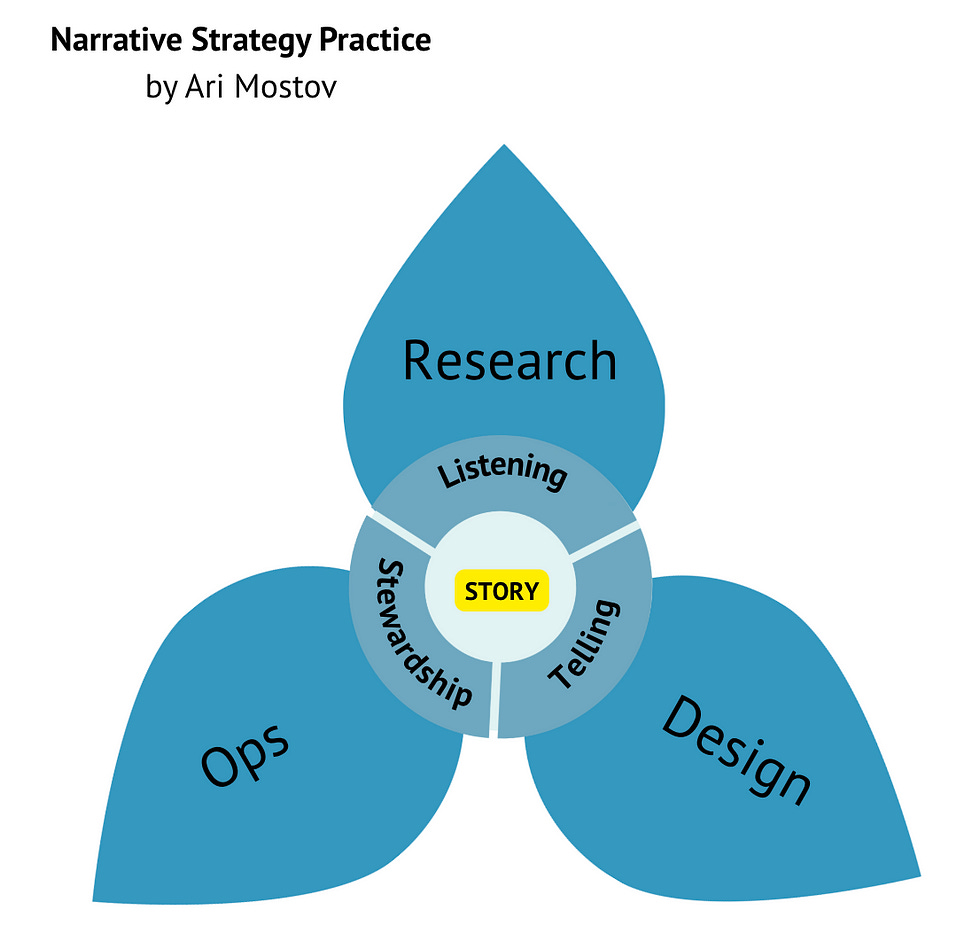
Phase 1: Story-listening
When I’m working with leaders to create a new narrative, I start with story-listening. Much like user-research or employee insights work, I’m seeking to understand what the current experience is for these leaders and their stakeholders. I meet with everyone who’s involved, listening to their stories to identify two things: 1) their desire(s) and 2) their challenges. These stakeholders are usually different teams within an organization, different stakeholders within an industry, or different organizations within a coalition. I’m paying attention to the language they use, how they frame their experience, and what themes are emerging. I start Phase 1 by reviewing existing narrative materials — specifically any documents that are used for the stakeholders internally. This can be handbooks, SOPs, strategy documents and presentations. Any touchpoint where the current narrative is being shared, I’m reviewing it and identifying the stories and language used. Then I meet with stakeholders, individually and in groups, to test the current materials. I ask them in particular how they interpret key distinctions, objectives and how words in these documents translate into their real world actions.
Once I’ve met with stakeholders and reviewed the existing materials, I move into Phase 2.
Phase 2: Storytelling
Now that I’ve met with the stakeholders and reviewed the current narrative and story touch points, it’s time to reframe the old narrative and offer a better one.
Using the details I collected from Phase 1, I create a contrast frames or a “from-to” model to start reframing the narrative.
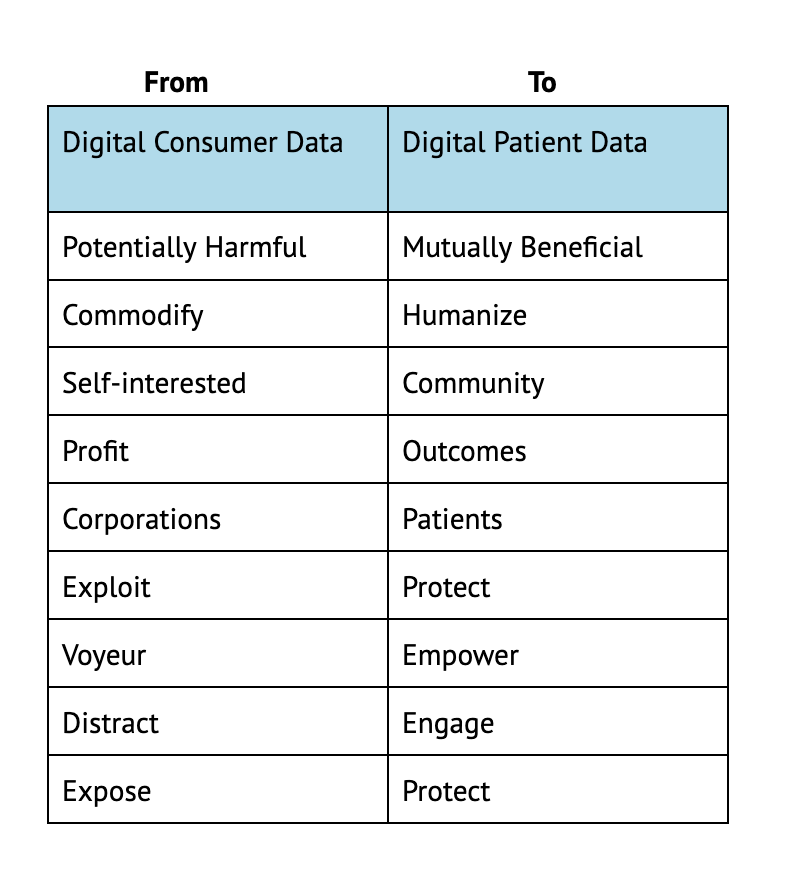
This contrast frame acts as heuristic for the stakeholders, providing a shortcut to identify how the new narrative that they are building is different than what already exists.
Using the contrast frame and the story-listening data I gathered, I craft a North Star Narrative. The North Star Narrative uses motivating, inspiring prose that translates the stakeholders’ vision, mission and values into language that clearly defines the purpose and intent. It can be likened to a a company credo or a religion’s bible. It’s the source of truth for the stakeholders and their initiative.
Here’s an excerpt of Johnson & Johnson’s North Star Narrative (credo).
We believe our first responsibility is to the patients, doctors and nurses, to mothers and fathers and all others who use our products and services. In meeting their needs everything we do must be of high quality. We must constantly strive to provide value, reduce our costs and maintain reasonable prices. Customers’ orders must be serviced promptly and accurately. Our business partners must have an opportunity to make a fair profit.
But having a North Star Narrative isn’t enough. Our stakeholders need to know how to take that source of truth and share it. We need to adapt the North Star Narrative into messaging outputs that deliver outcomes. Once the North Star Narrative has been reviewed, tested and agreed upon across all stakeholder groups, we start crafting the messaging for different audiences.
For instance, if a health tech company is launching a new product, they need to be able to communicate their North Star to not just patients, but also providers, payers and policymakers. Using the North Star Narrative as our compass, we create key messaging for each of these audiences and specific needs.
In addition to the key messaging, we also create models or diagrams that help illustrate the relationships and ontologies central to the initiative. These can also include metaphors or analogies that help give clarity and context to abstract ideas.
Often, stakeholders have different understandings or interpretations of key terms and distinctions. By creating a visual reference guide with the key relationships, we can align stakeholders so everyone is on the same page.
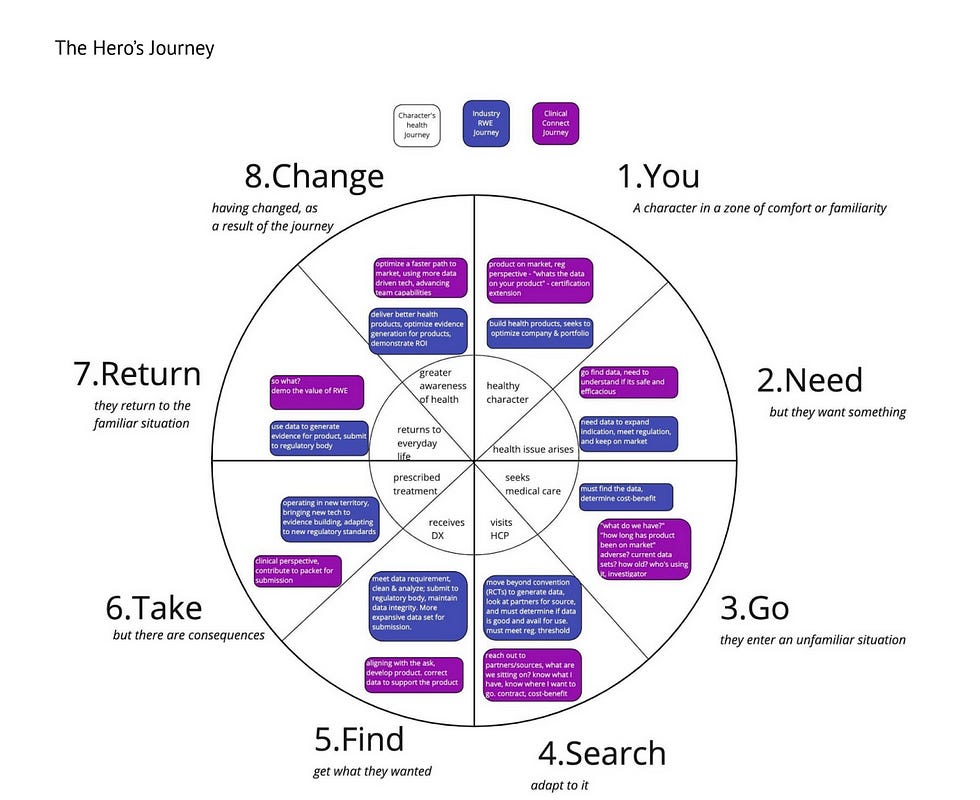
The North Star Narrative with it’s key messaging and ontologies becomes what I call The Narrative Bible. This living document is the playbook for the initiative, providing a new narrative and key assets that are then implemented in Phase 3.
Phase 3: Story Stewardship
Now that we have a working Narrative Bible that’s been reviewed, tested and approved by stakeholders, we can start evangelizing the new narrative. This is where we take all the story touch points and update them with the new narrative framings, distinctions and messaging. By crafting the Narrative Bible internally, we now have the language and strategy to communicate the new narrative we’re building to our external audiences. Cross functional communications become imperative, yielding the coordination and alignment needed to achieve results. The Narrative Bible’s messaging is used to execute functions, leading each stakeholder group to deliver their piece of the narrative.
Story stewardship is where the initiative’s operations meet purpose. With the Narrative Bible giving each stakeholder an understanding of what they are doing and why they are doing it, strategies are no longer just idle documents but realized results.
Narrative Strategy: Storytelling for Outcomes
Creating a new narrative takes more than just a company rebrand or all hands meeting. It’s an iterative and participatory approach to strategy that leverages our story-driven behaviors to achieve change. Leaders leading teams, organizations, and movements know that crafting new narratives is essential to achieving what we desire, but its narrative strategy that transforms those ideas into reality.
Ari Mostov is a narrative strategist. She crafts new narratives with leaders across healthcare, finance, energy and deep tech. Learn more: www.wellplay.world