

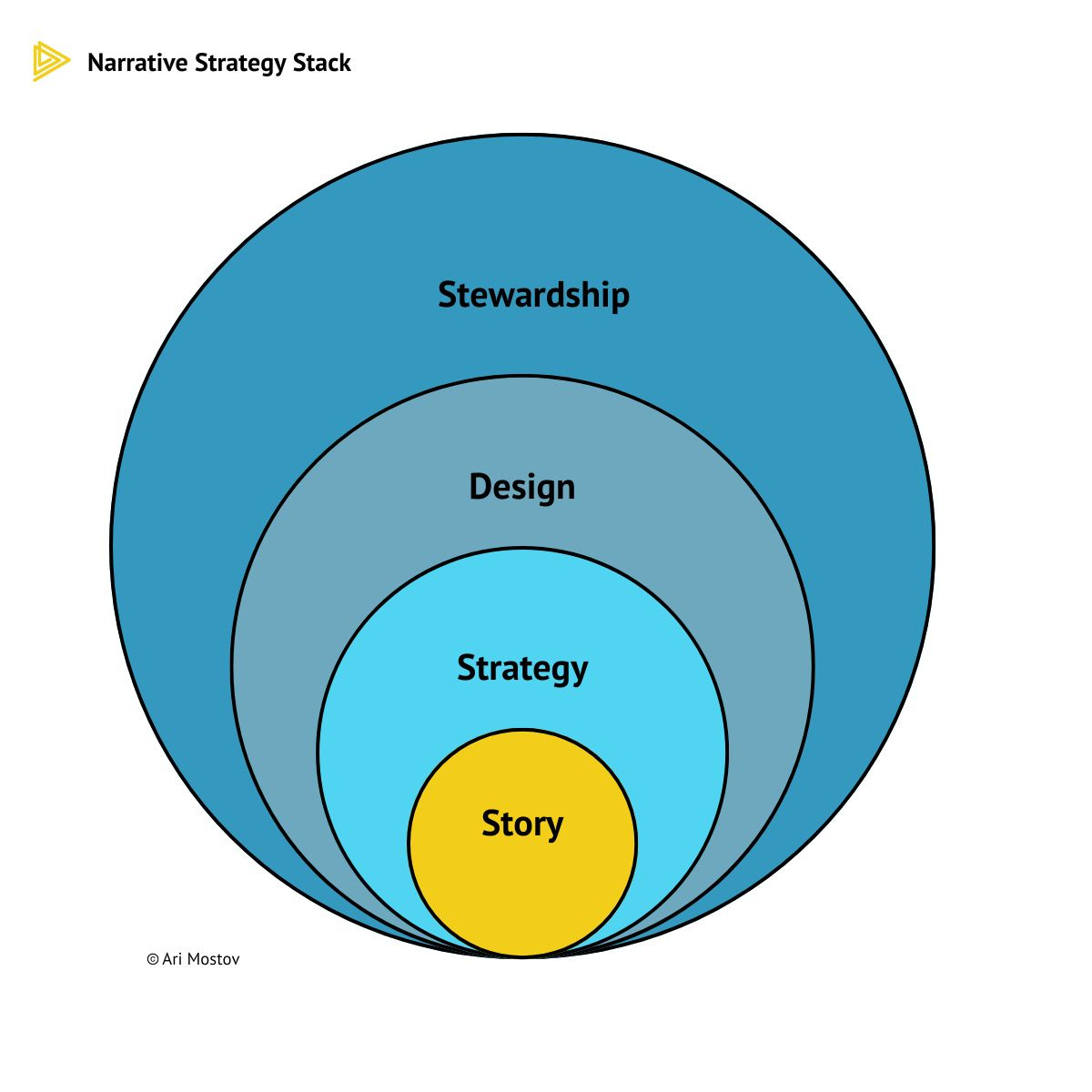
Narrative strategy is not just a catchy way to describe marketing, publicity or storytelling.
It’s a practice, complete with competencies, talents and continuous learning. For me, Narrative Strategy completes the “intent-action-change” gap that we so often see when a great story is told but no results follow. It’s because Narrative Strategy is not just about inspiration or cute slogans. It’s a method for change that recognizes our innate story-driven experience. It harnesses the power of story to deliver human coordination, fruitful collaboration and sustainable outcomes.
My Narrative Strategy stack is broken into 4 components:
1. Story
This includes story-listening, storytelling and story-living. Story is not just someone recounting what happened. It’s a distinct medium for crafting meaning, comprehension and desire.
2. Strategy
We use the stories we’ve uncovered to craft a strategy that is also a story. It’s more than a call to action or a static document. It’s a guide for how we will accomplish what we seek.
3. Design
With an emphasis on communications, the Design portion of Narrative Strategy creates the artifacts we use to reinforce the story and distribute it across channels.
4. Stewardship
Stewardship in Narrative Strategy is more responsive than typical implementation plans. With Stewardship, we always come back to the future we’re crafting, but remain agile to emerging story threads. Each function and tactic is to achieve the story. This is also where we see consistency across all story touch points.
This is a broad overview of my Narrative Strategy stack and I plan to go into more detail soon. In the meantime, check out my white paper on Narrative Strategy: Storytelling for Outcomes to learn more.