
Narrative Strategy: You've Imagined Something Better - Now What?
Transforming imagination into reality


You’ve done it. You’ve rescued your brain from the sinking quicksand of the status quo, moving beyond the current context of what’s around you and seizing something better: a dream, a vision — a future you want.
Your imagination is not just a passing thought. It’s grounded in possibility. It feels real — even for a moment.
But how in the world do you take that image in your head and make it tangible? How does it become your new normal?
I think about this a lot in narrative strategy. It’s no easy task to shift our minds (and bodies) into a different experience and then create a new normal — but as humans we are uniquely capable of this. We can create new narratives. We can transform thoughts into things.
But how?
How do we transform those images in our head into the future we want?
This is the question I’ve been sitting with for over 8 years. Here’s what I’ve learned so far as a narrative strategist.
Identify the current narrative (Story-listening)
David Foster Wallace gave a commencement speech featuring a story about fish. The fish asks a fellow fish, “how’s the water?” to which the second fish responds, “what the hell is water?”
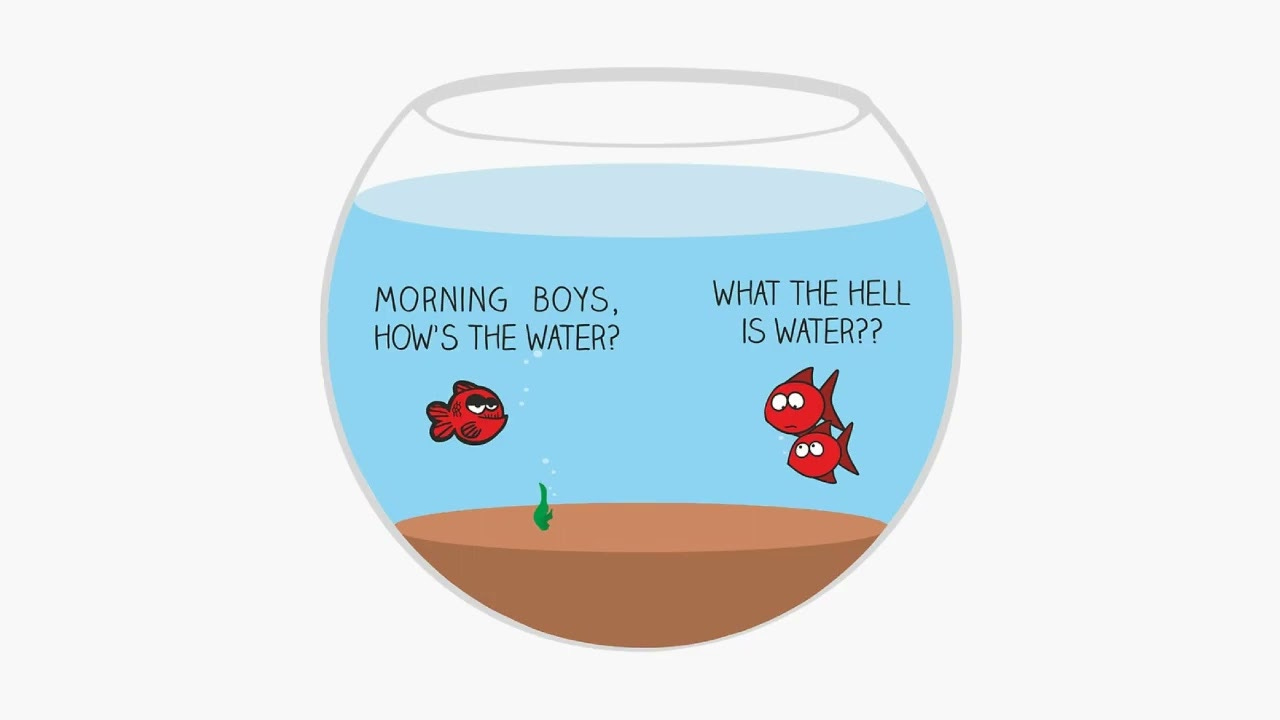
Narratives are like the water the fish are swimming in. It’s hard to identify the water we’re in, and even harder to recognize it as something that we can talk about — and even change.
One of the first things I do to identify a narrative is look at the language being used and stories being told within a community. What are people saying? How do they talk about their problems? Are they sharing stories of success? Defeat? Fear? Love? Is the water they’re swimming in murky? Poisoned? Pristine? Do they know there are other bodies of water to swim in?
I am listening for the current stories being shared. Each story is a piece of the larger narrative we’re currently swimming in. By identifying those pieces, I can see the narrative and start finding opportunities for change.
Externalize your imagination (Storytelling)
It’s not enough to have an idea locked in your head. You need to tell it to others. This can be done in a variety of mediums, but I prefer the good old-fashioned written word as a starting point.
Yet there’s something we often forget about capturing our imagination into an artifact — it needs to activate our senses. When we just hear or see something, it’s not always enough for us to believe in it. Experience requires full sensory engagement, with the added support of meaning-making. This is where storytelling becomes crucial.
Sometimes this looks like a beautiful piece of poetry, or an immersive art exhibit. But we have to be considerate of our bodies and the state and story they’re in. If your body is in fight-or-flight mode, no amount of fancy words and pretty pictures will make a better narrative available to you. Feeling safe is crucial for imagination to seed itself in reality, allowing the new stories we tell to be readily embraced.
Coordinate and take action (Story-stewardship)
With a new narrative available to us, we can coordinate ourselves and others to start acting and behaving differently. Our motivations are realigned around a new future made possible, making the friction of change a little more bearable.
Rather than resisting change or resigning to the status quo, we have the story artifacts of what we’ve imagined guiding us into the new narrative. This is where strategy becomes implementation, or a goal becomes milestones and tasks.
Once we’ve identified the old narrative and crafted a new one, we start taking the actions toward our desired future. The images in our head have been translated into artifacts, and those artifacts become tasks. Each task is ushered in with the momentum of something we fully embrace.
And when we get lost or find ourselves stuck again in the old narrative, we simply ground ourselves in the new narrative, feel our desired future in our senses, sharing the stories of the world we want, and finding the motivation we need to make our vision a reality.
Transforming imagination into reality can sound like magic. But nearly everything we live inside was once an idea: a tool, a policy, a norm, an institution, a right.
Imagination becomes reality when we:
name the old narrative (story-listening),
craft a new one (storytelling), and
steward it into the world through coordinated action (story-stewardship).
If you want to begin right now, start here:
Write the current narrative in one sentence — then write the new one you want to live inside.
The rest is stewardship.
Want to try narrative strategy on your own? Start with my intro to narrative strategy webinar